Credit: Korean Cultural Center in Stockholm
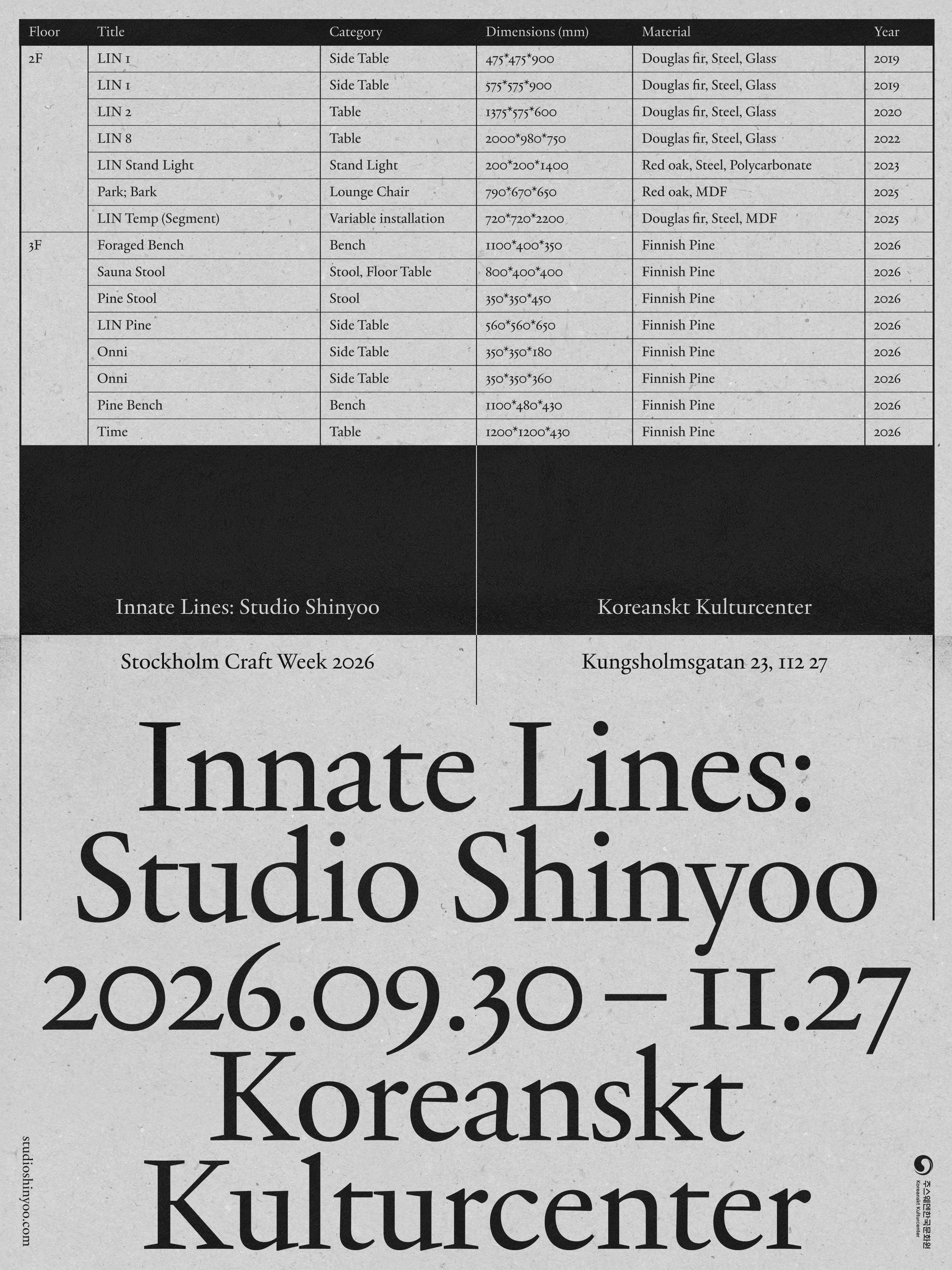
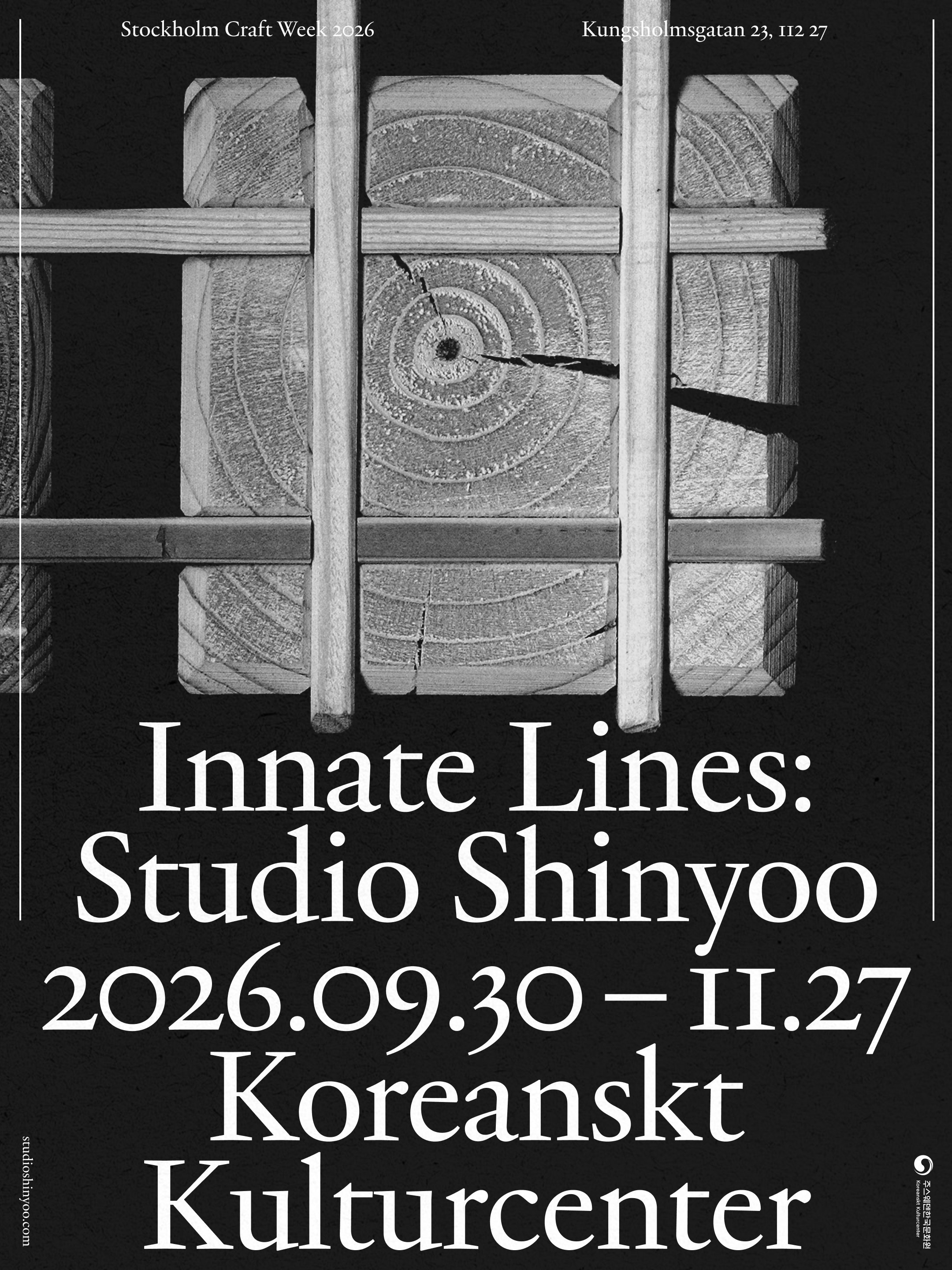
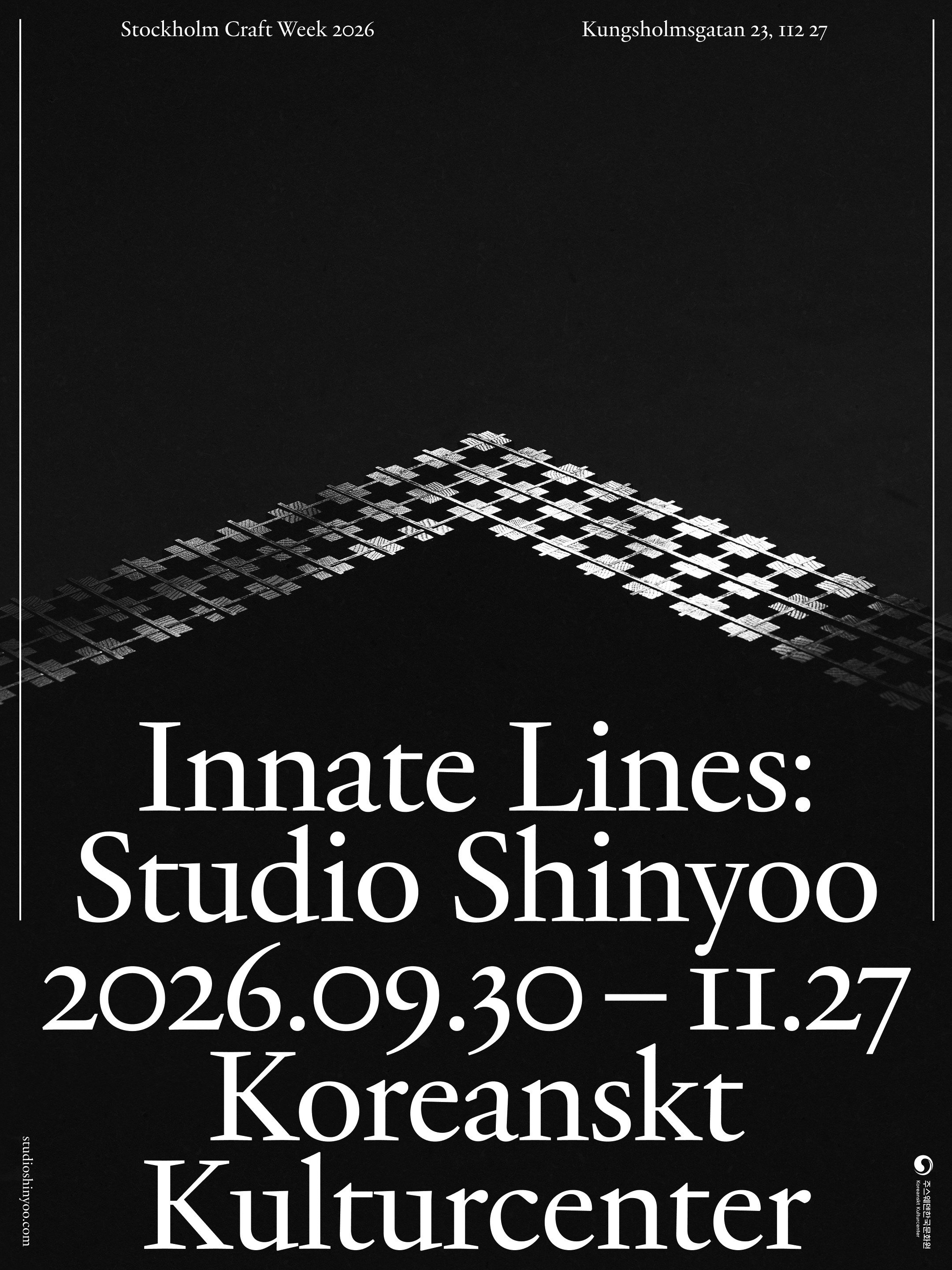
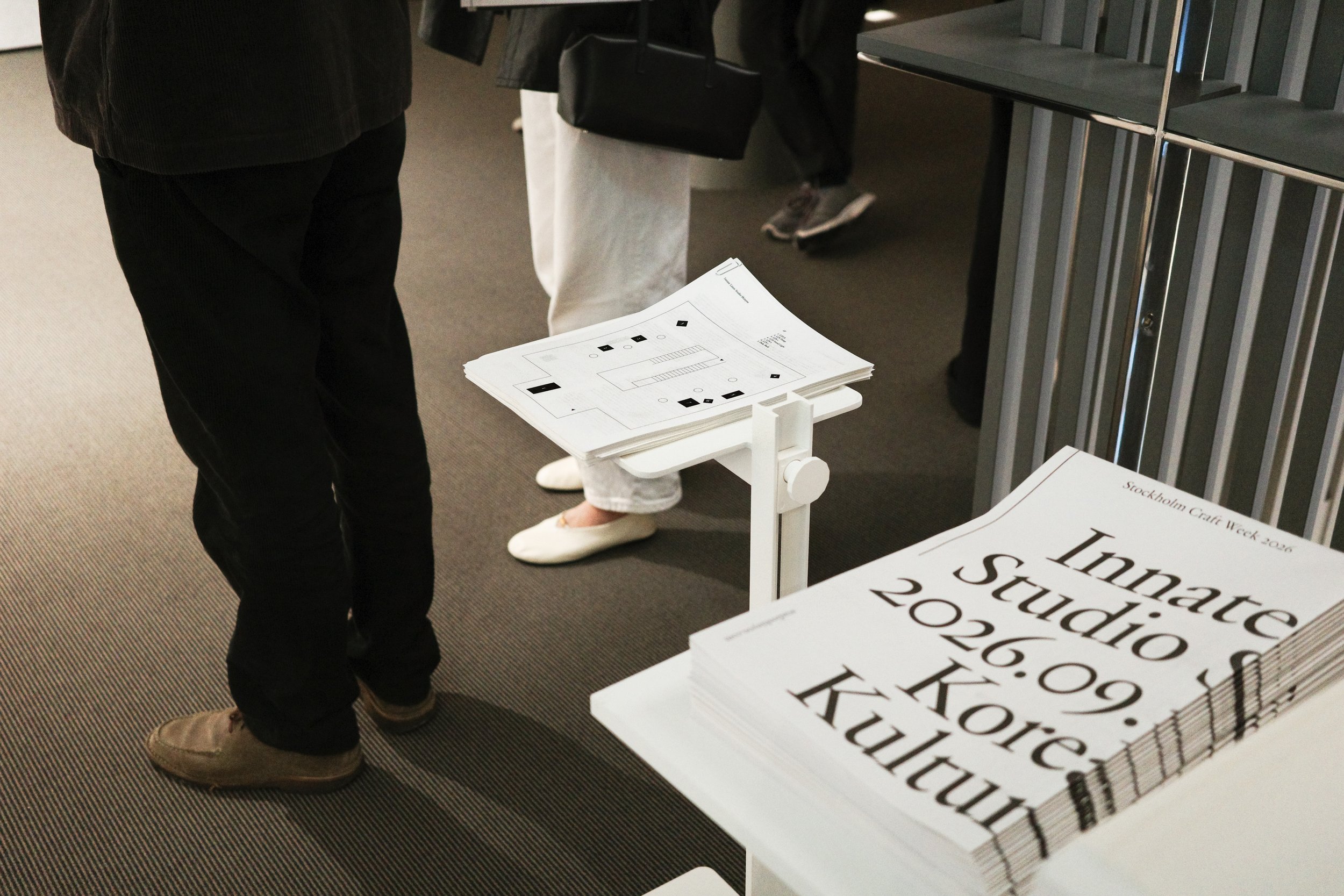
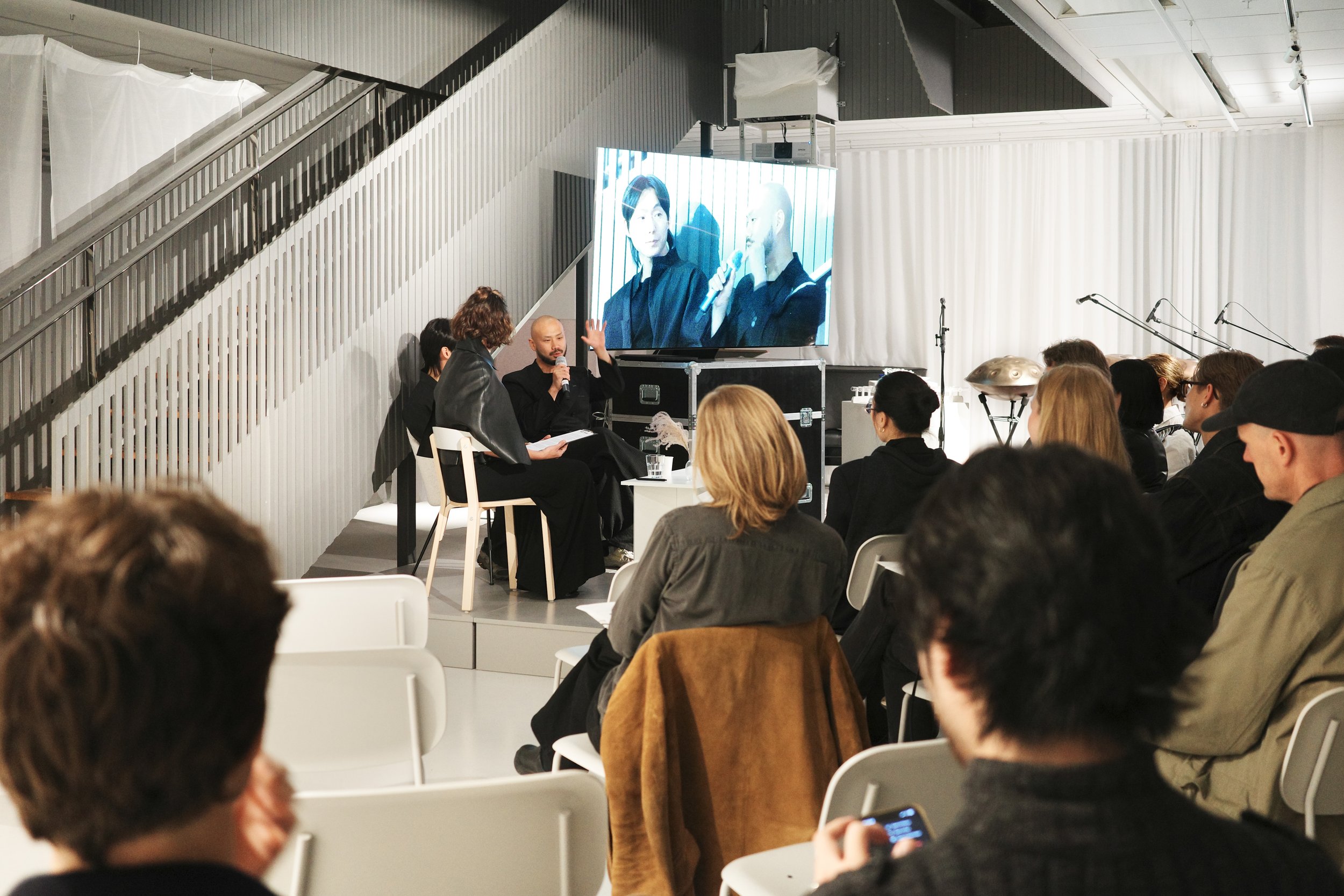
In September, I was invited by the Korean Cultural Center in Sweden to conduct the artist talk for the opening of Innate Lines: A Solo Exhibition by Studio Shinyoo, part of Stockholm Craft Week 2026. I have been following the South Korean design duo Studio Shinyoo (studioshinyoo.com) since 2024, after I encountered their work both in art museums and brand flagship stores in Seoul. Then I heard about the upcoming exhibition in Stockholm – and was over the moon.
This one is special also because it is the first exhibition I supported as part of my new role with the Center – Honorary Strategic Advisor for Arts, Culture, and Heritage. As is now tradition, I recorded my conversation with the artists so I could share it with you. I hope you enjoy it.
DKL: The origins of Studio Shinyoo can be traced back to Sweden, and Innate Lines is your first individual exhibition in the country, which feels like a full-circle moment. Could you tell us more about how the studio came to be – how the two of you first met, and what role Sweden has played in shaping your aesthetic language?
YongSub SHIN: I first came to Sweden in 2017 – not to study, but simply to start woodworking on my own. By then I had five years of experience, so I felt confident I could manage working here. For about a year, I ran my own design studio.
Then I faced the truth that I'm not good at advertising. I only knew how to design furniture and make woodwork pieces – I had no idea how to make a living. So I contacted my closest friend, Seungmin Yoo, to help me out with marketing and everything. He decided to come to Sweden, and we started our design studio as a duo.
We were looking for a specific place to work from, searching for workspaces around Sweden, and we landed on the Forsvik region. That's where we decided to start our studio.
But there were a lot of issues with the working visa, so we were waiting for a decision. To renew our working permit, we had to be outside of Sweden, so we left and went back to Korea. And then suddenly COVID happened. We were trapped in Korea for three or five years, and I had to close my bank account, give up my personal ID and company registration – everything. So we started our design studio in Korea.
Credit: Korean Cultural Center in Stockholm
DKL: In the exhibition essay, you describe a technique in which a path is carved into the log and repeatedly burned, with the softer tissue brushed away to reveal the denser grain. You mentioned in our conversation that this is a traditionally Korean technique. How does this technique – and Korean craft knowledge more broadly – enter your practice? How have you developed your understanding of these techniques, particularly given that much of your practice has also been shaped in Europe, including your current master’s studies at Aalto University in Helsinki?
YongSub SHIN: Yes. The wood-burning technique – I think it may have developed worldwide. I found something in Germany too, so maybe there are other aspects; I found another example in Switzerland as well.
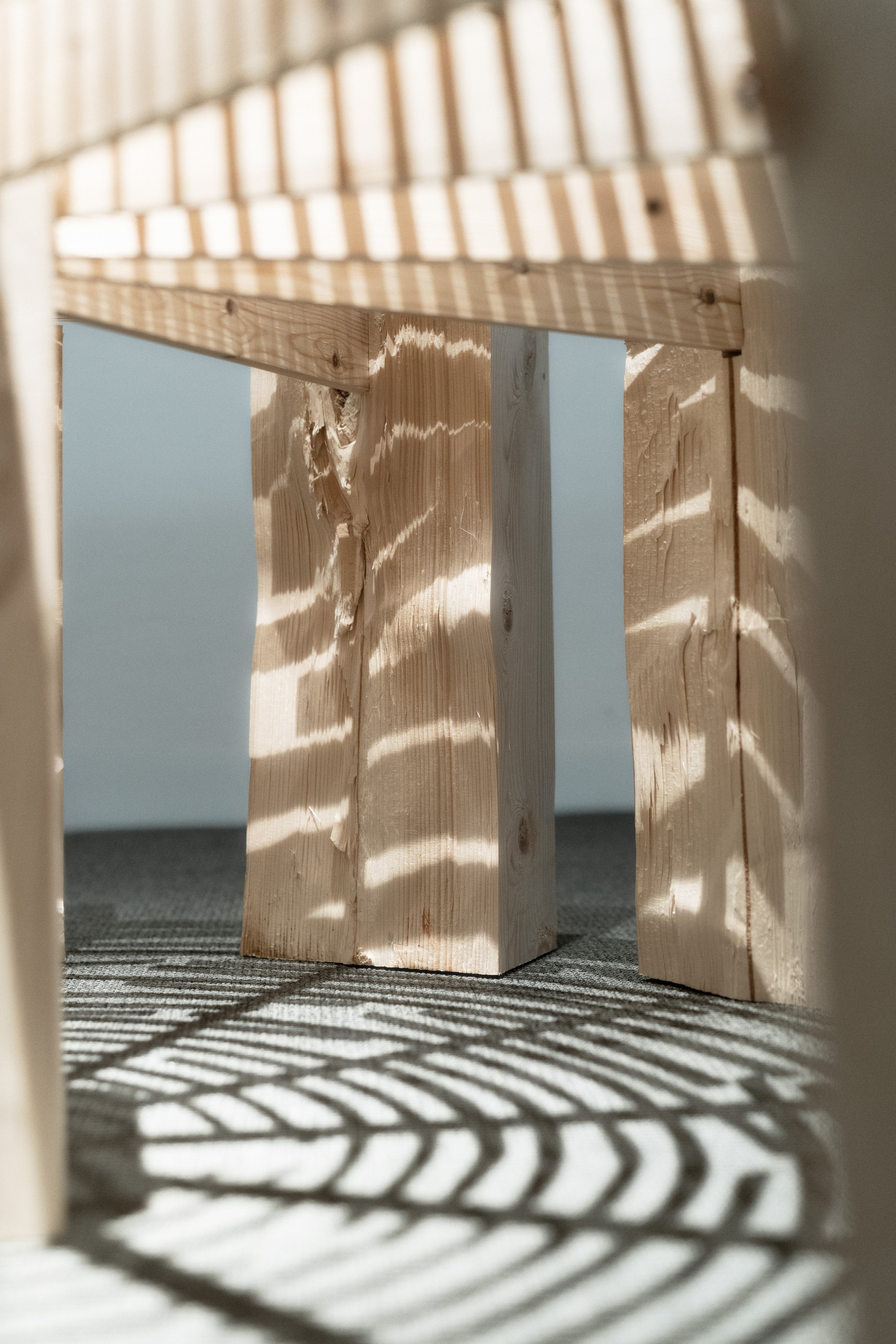
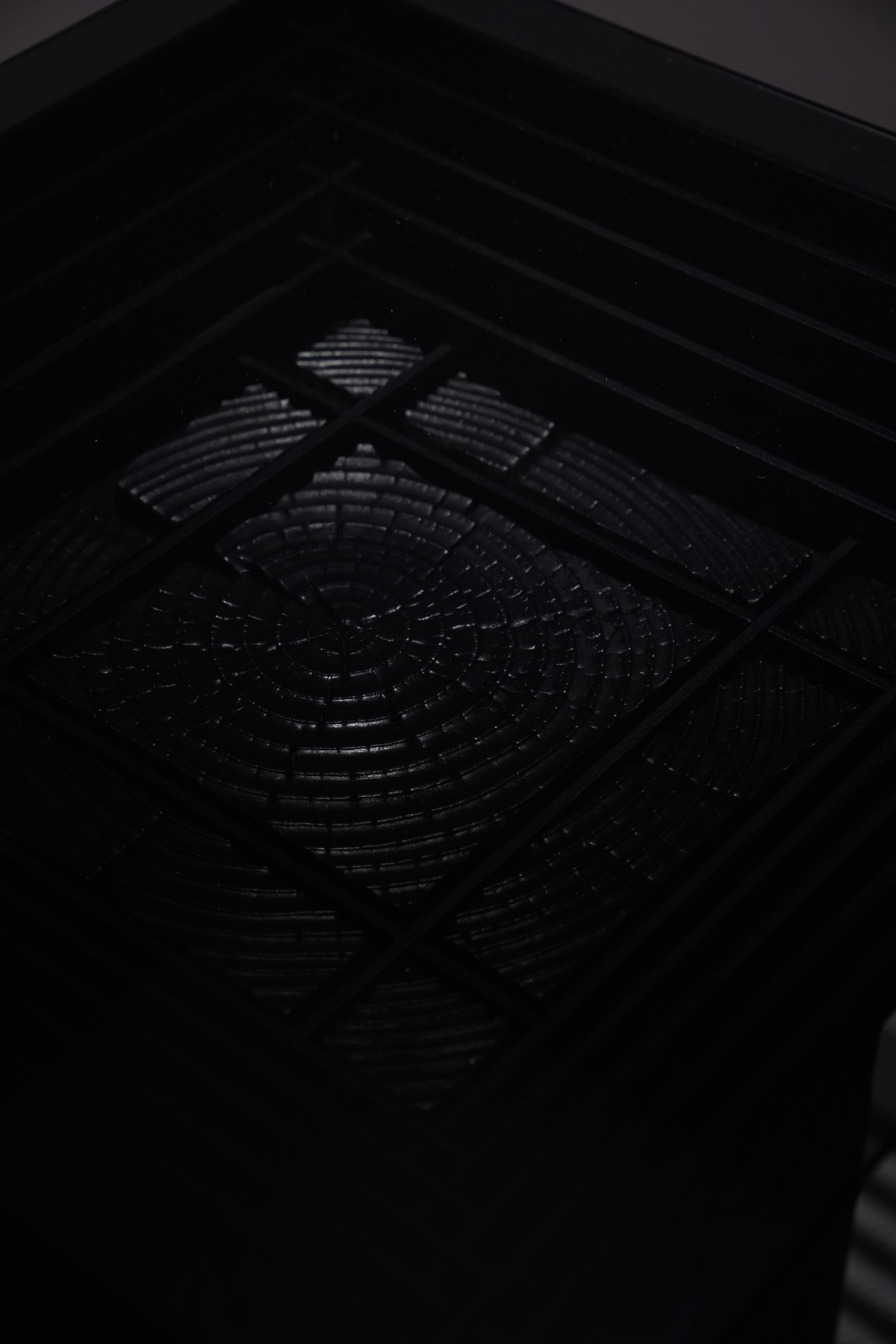
But the technique of brushing out the wood after burning it, I think it took hold specifically in Korea. Japan has a similar technique called yakisugi, but they decided to keep the burned layer on the surface. In Korea, we remove that part – and then you reveal the natural pattern of the wood itself.
From my perspective, traditional Korean craft is aimed at naturalness and a tolerance of imperfection. From my experience in the Nordic countries, I think we both like wood very much in general. But in the Nordic countries, the wood technique developed through the modern era in a more practical way – more useful, very rational. And I believe there is also a bit of joyfulness inside of it.
Credit: Korean Cultural Center in Stockholm
Seungmin YOO: I would say that, rather than simply using traditional techniques as they existed in the past, we see them as accumulated knowledge passed down through generations. What matters is understanding why these techniques came into being in the first place, and why people began to conceive of, develop, and refine them over time.
In this sense, we see tradition not simply as a set of techniques to adopt, but as a body of accumulated knowledge and a way of working that we can draw upon and incorporate into our own practice. I think this may be a more meaningful and appropriate way of engaging with tradition and traditional techniques. That's how I see it.
YongSub SHIN: Thinking about our work, I feel it still sits in between a Nordic aspect and Korean tradition – because we carry a fundamental characteristic of that culture in us. So even when we focus on the imperfection of wood as a material, we still want to maintain the very basic, practical purpose of furniture. It should be usable as furniture. Even if a piece looks like art furniture, our intention is always practical use in a domestic environment.
DKL: Which leads me to my next question – your work often brings together forms that feel familiar across both Western and Eastern cultures, such as the column. At the same time, you often place opposites in dialogue – for example, the organic lines of wood against the stark, straight lines of metal. Is this tension between unity and contrast something you consciously pursue? Do you feel this exhibition has allowed you to explore this tension further?
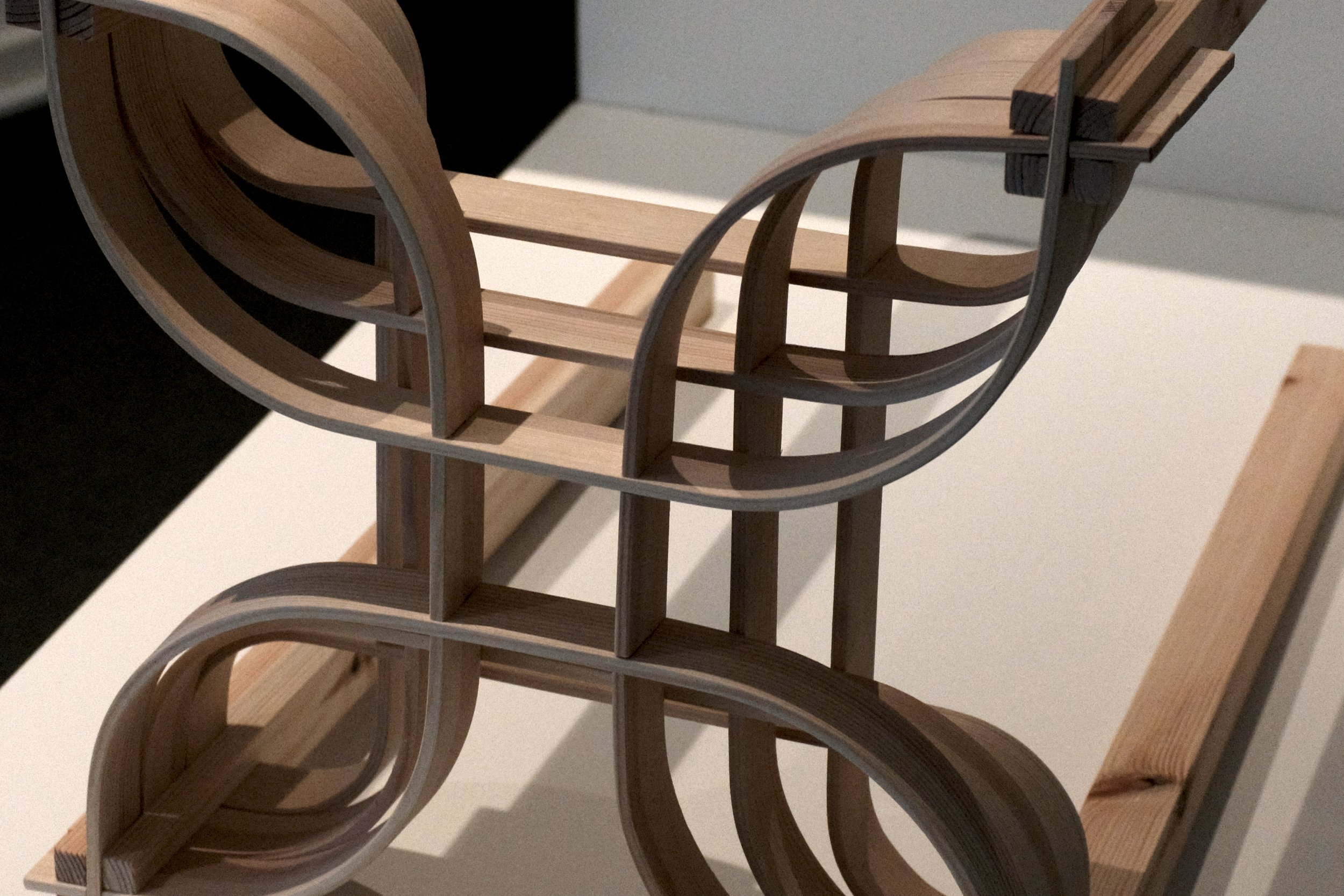
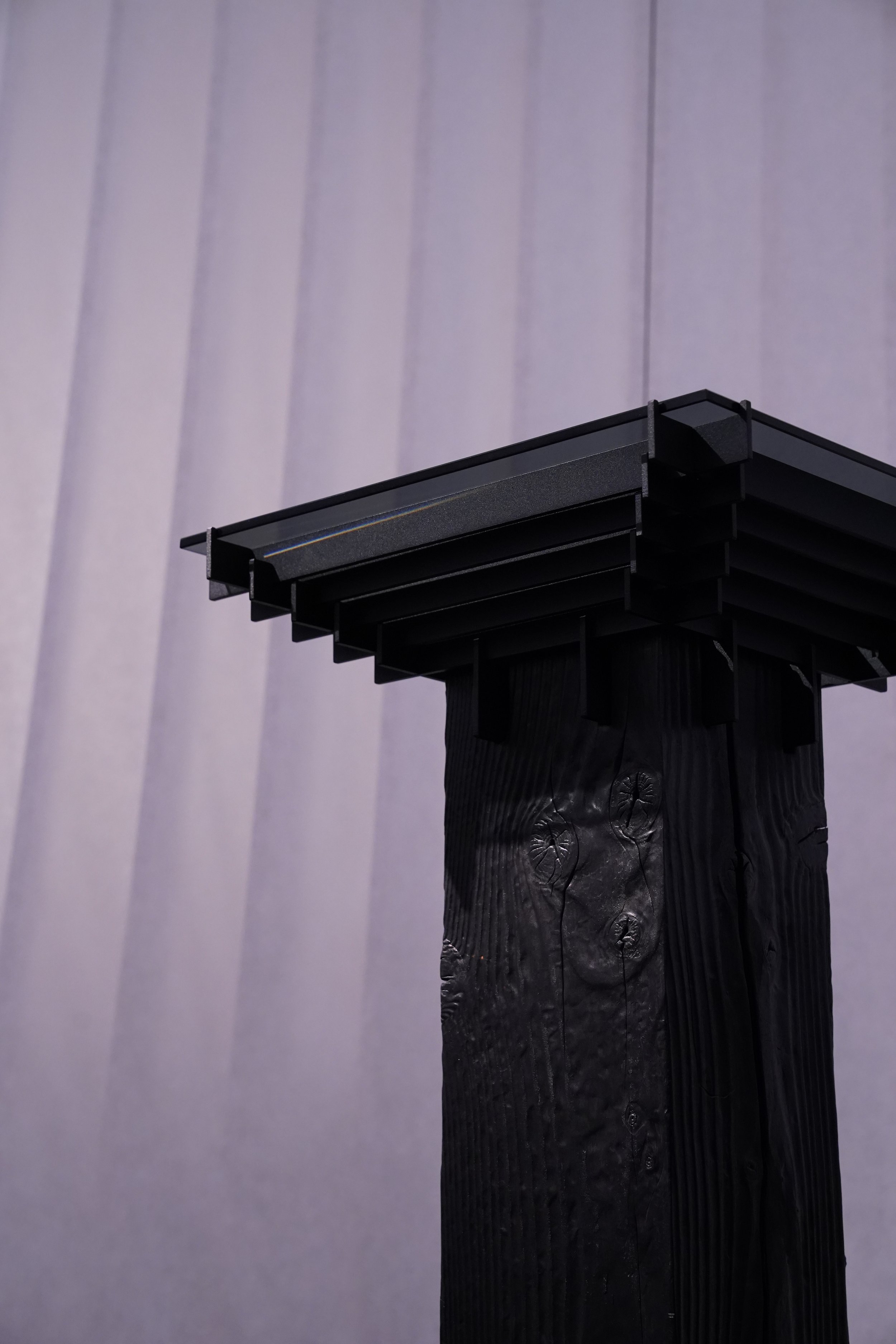
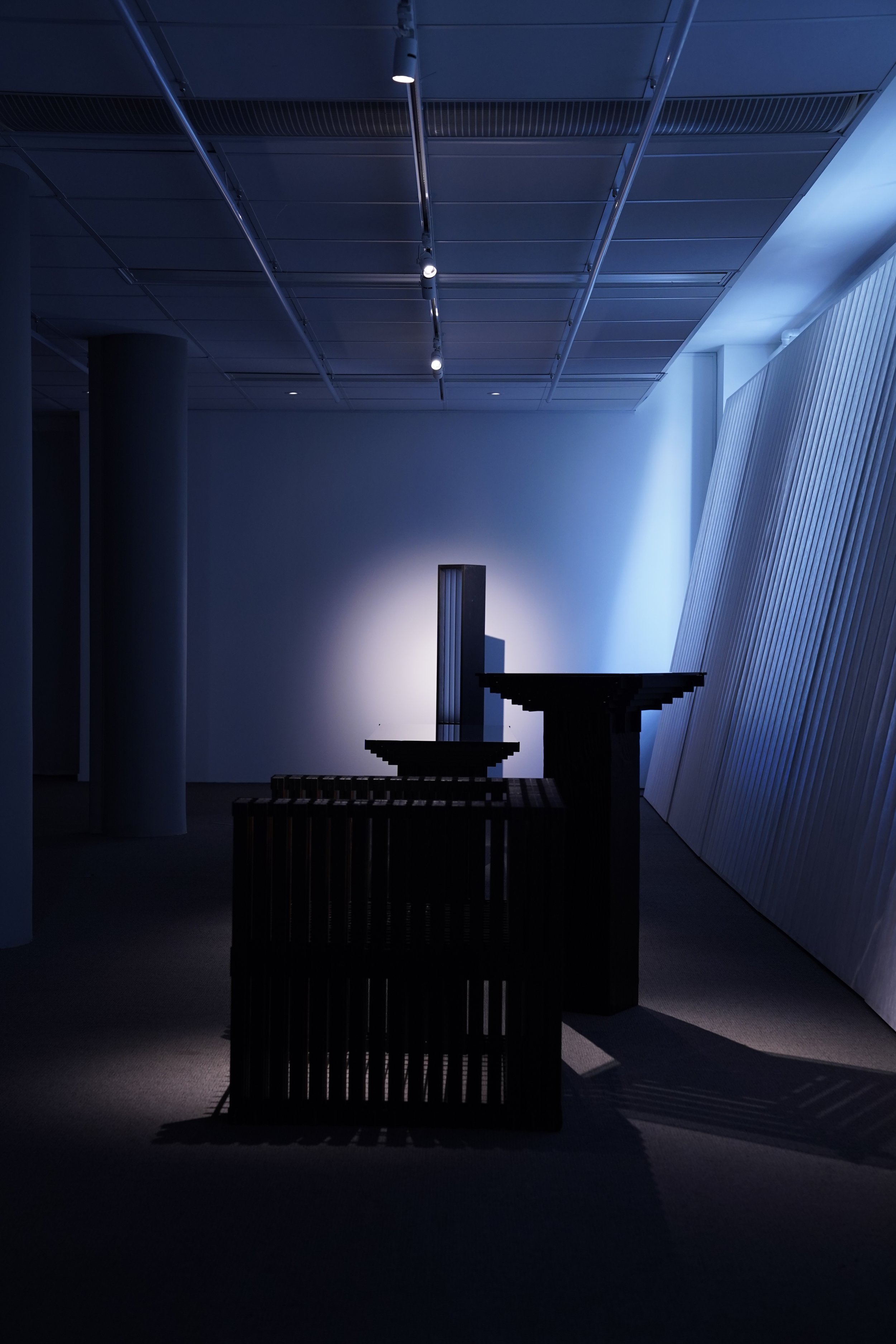
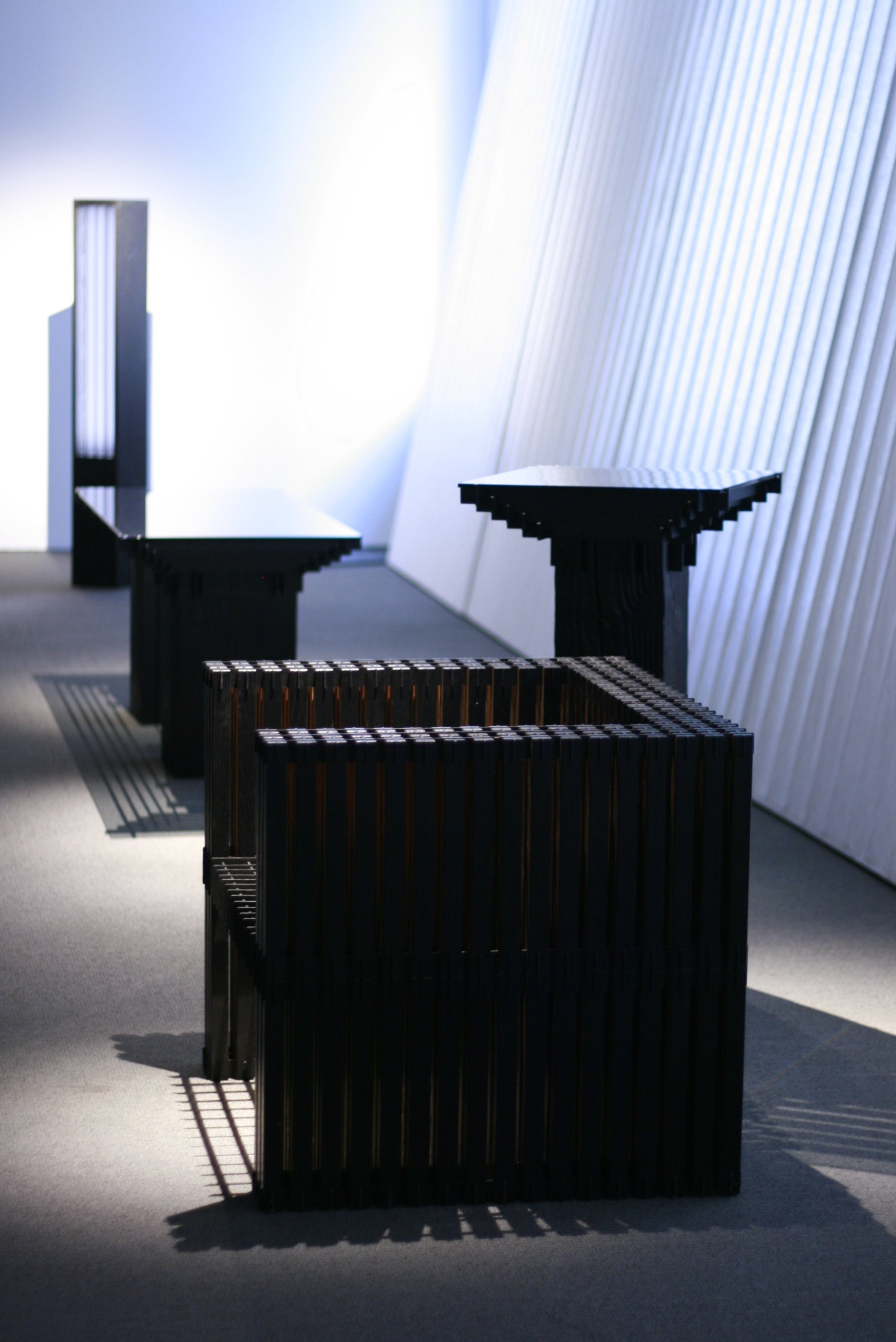
YongSub SHIN: There are three tables on the second floor of this exhibition, called Lin 1, Lin 2, and Lin 8. When we were designing the furniture, our main focus was to convey the modern environment. We have this large log – wood representing nature – and then metal, a material artificially extracted from the earth.
We place our artificial living environment on top of nature – the wood. It's a table, so its purpose is to allow us to do things on its surface. For us, it's a kind of metaphor for our modern world.
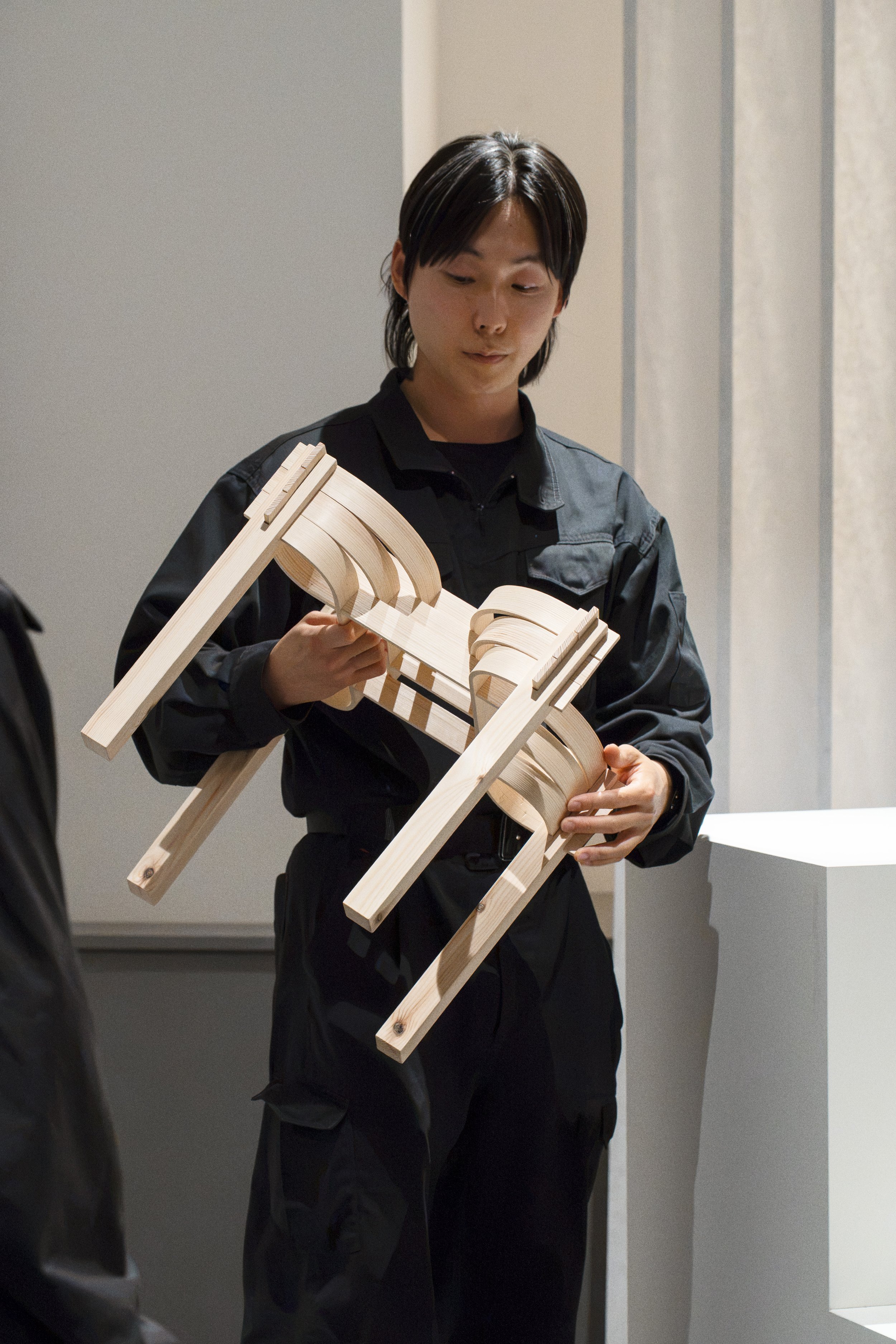
YongSub SHIN of Studio Shinyoo | Credit: Korean Cultural Center in Stockholm
Credit: Studio Shinyoo
DKL: You have said: “I have worked as a woodworker, at times as a furniture designer, at times as an interior designer, and at times as an installation artist. I started this work because I loved wood, I loved people, and therefore, I loved furniture.” Looking back across these different roles, do you see a fundamental shift in the way you approach your work depending on its function or context? Or is there something that has remained constant throughout?
YongSub SHIN: At the very beginning of our practice, we simply loved working on developing our own style and engaging in creative exercises. But over the past five years, we have explored many different variations in our work – sometimes we do art installations, sometimes interior design, and sometimes branding.
In the end, I found myself a little lost among so many different paths, so I decided to start studying Contemporary Design in Finland. It has been one year now, and I think it has changed me a lot.
In some ways, I think Finland is quite similar to Sweden. The nature is somewhat similar, the air is very fresh, and people love spending time in nature. I also try to spend as much time as possible in nature alongside my studies. This has shifted my perspective on design and on our purpose as a design studio.
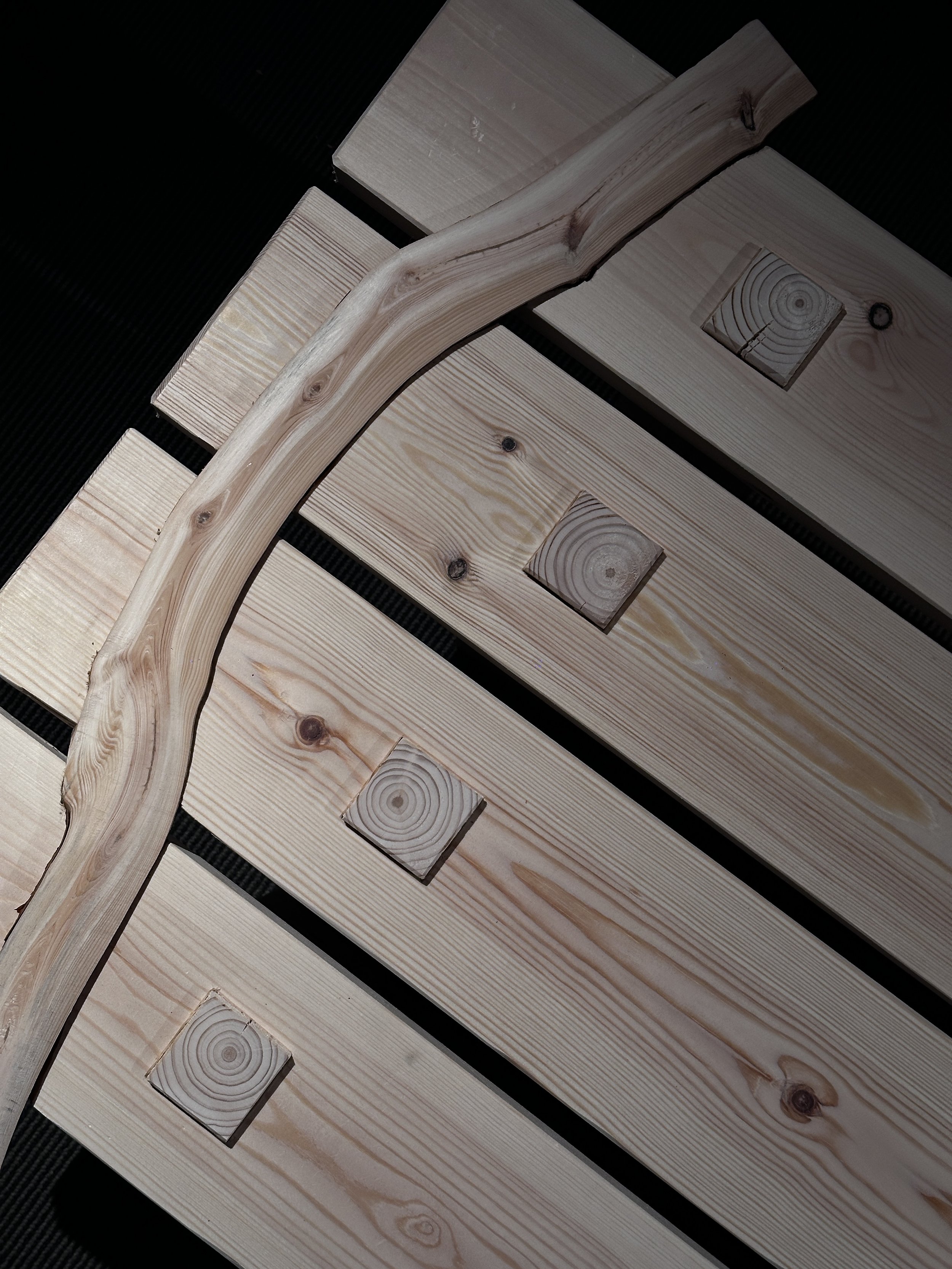
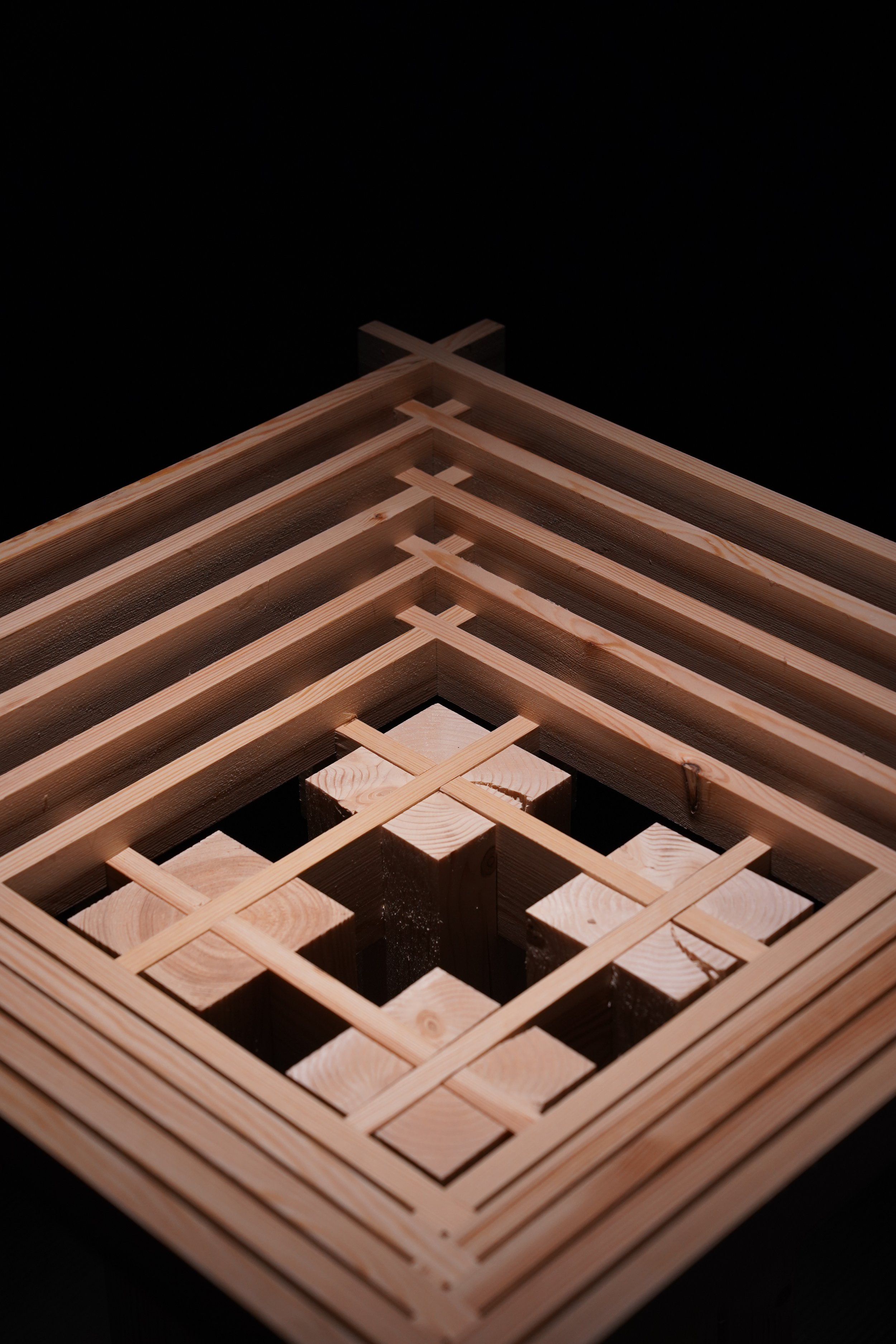
DKL: I find the difference between the two exhibition floors fascinating – you can clearly see how the work becomes increasingly organic. When I went up the staircase, I could smell the wood, which made the impression even stronger. It's wood as it is – unburnt, without any added layers of color – and it's also very fragrant. What you're saying is almost tangible in the work. You're clearly moving in a new direction, while the core of who you are as a studio remains very visible.
Credit: Korean Cultural Center in Stockholm
Credit: Studio Shinyoo
DKL: I first encountered Studio Shinyoo at the 2024 Seoul Museum of Art Craft exhibition Crafting the House. Almost immediately afterwards, I also visited the Sulwhasoo flagship store – the Korean beauty brand – in Bukchon Hanok Village, where your fully transparent acrylic furniture is on display. So I've seen your work in very different environments, which is why it's interesting to hear that you felt a bit lost. To me, you have a very distinct artistic language, and I think this becomes particularly clear when looking at the different floors of the exhibition here at the Korean Cultural Center.
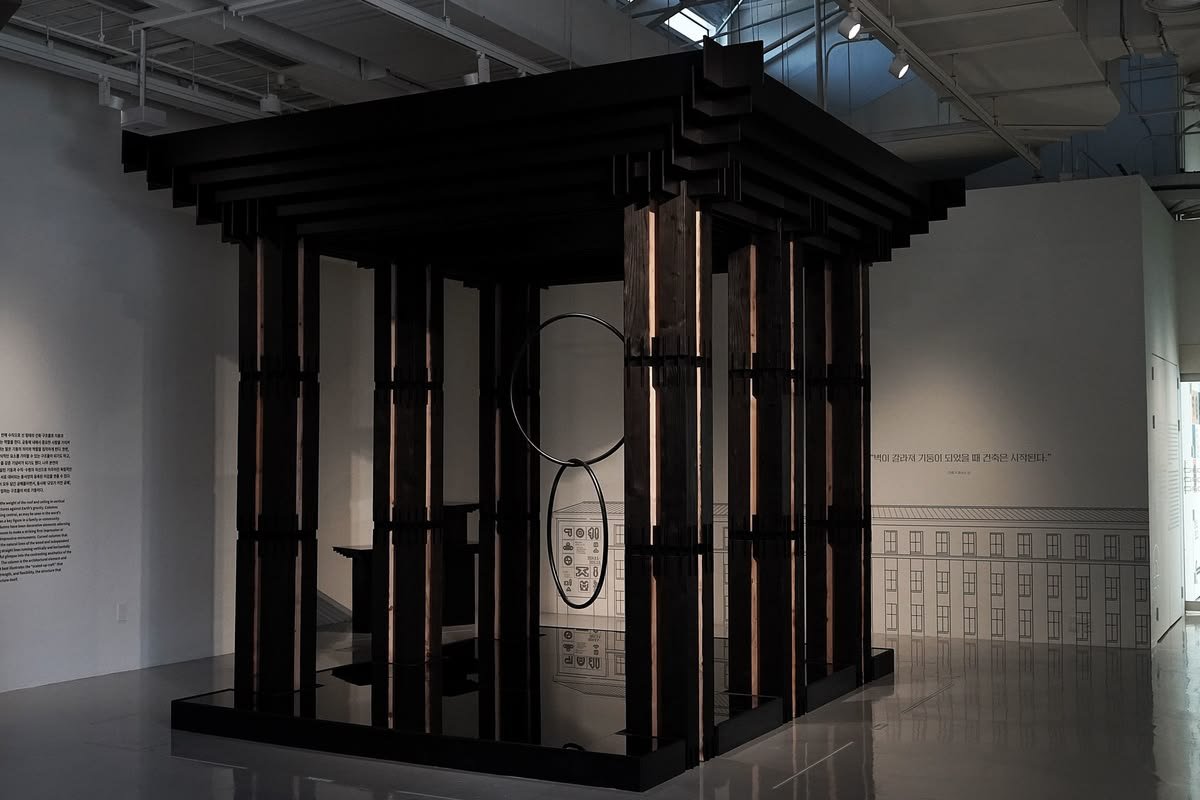
Installation at the 2024 Seoul Museum of Art Craft exhibition Crafting the House | Credit: Studio Shinyoo
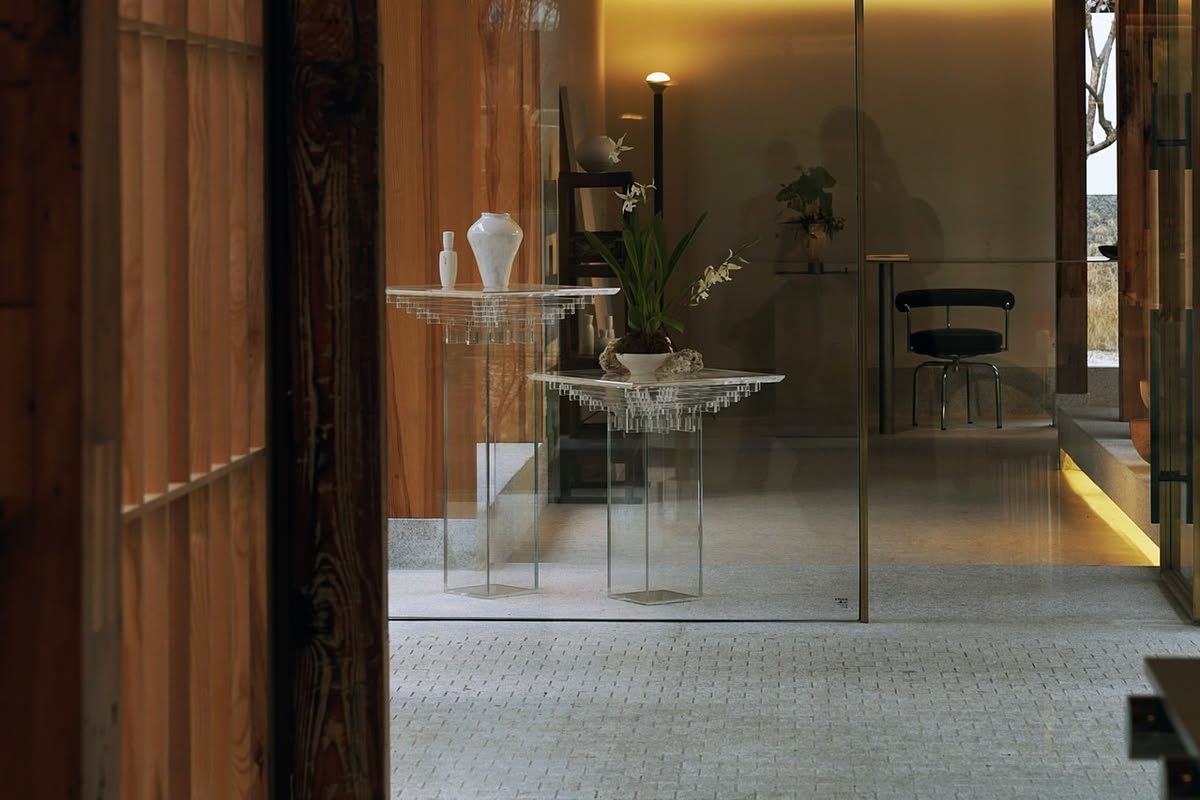
Acrylic furniture at the Sulwhasoo flagship store in Bukcheon Hanok Village in Seoul | Credit: Studio Shinyoo
DKL: As a final question: Korean craft has been receiving increasing international attention for its close engagement with materials – something also reflected in the addition of the “Material Practice” section to this year’s Frieze Seoul. You have identified a similar attention to materials in Nordic craft. What common ground do you see between the two traditions, and where do you think they fundamentally differ?
YongSub SHIN: As I mentioned before, there are similarities between Nordic aesthetics and traditional Korean aesthetics. I wrote about this using a quote from an old Korean historical text. It's called Geom-i-bul-lu, Hwa-i-bul-chi [Hangeul: 검이불루 화이불치; Hanja: 儉而不陋 華而不侈; meaning “검소하되 누추하지 않고, 화려하되 사치스럽지 않다” – frugal but not shabby, splendid but not extravagant]. It is about being humble in your choice of materials and way of living, but without suggesting poverty. In other words, you maintain a sense of humility without appearing poor. That's a part of Korean aesthetics, and it has a very long history.
Somehow, I feel there is a similar connection with Nordic aesthetics. In Nordic culture, wood is often used as the dominant material in different environments, yet it is often used as it is, in its natural state. So I think there is a similarity in the way both cultures approach materiality.
Credit: Studio Shinyoo
Credit: Studio Shinyoo
Credit: Studio Shinyoo
Credit: Studio Shinyoo
YongSub SHIN: But if I were to consider the differences between the two cultures, I think they might have something to do with practicality. Nordic countries have traditionally placed great importance on function and practicality when using this precious material, wood.
In Korea, if we look at traditional architecture, for example, the hanok [traditional Korean house], we can see a different approach. The wooden pillars are placed on stone foundations, and the wood is carved to follow the shape of the stone.
If I compare this with Japanese culture, which is very similar yet also quite different, I've heard that traditionally, when building a house in Japan, people would try to find the perfect piece of wood for each specific place in the architectural plan. In Korea, however, we would simply use the wood available in our surroundings and adapt our design to the material, rather than forcing the material to fit our purpose. Maybe that is the difference.
I think we are still somewhere between these two different approaches. We embrace the randomness, cracks and imperfections of the timber or wood itself, while still wanting to maintain a practical purpose.
Credit: Studio Shinyoo
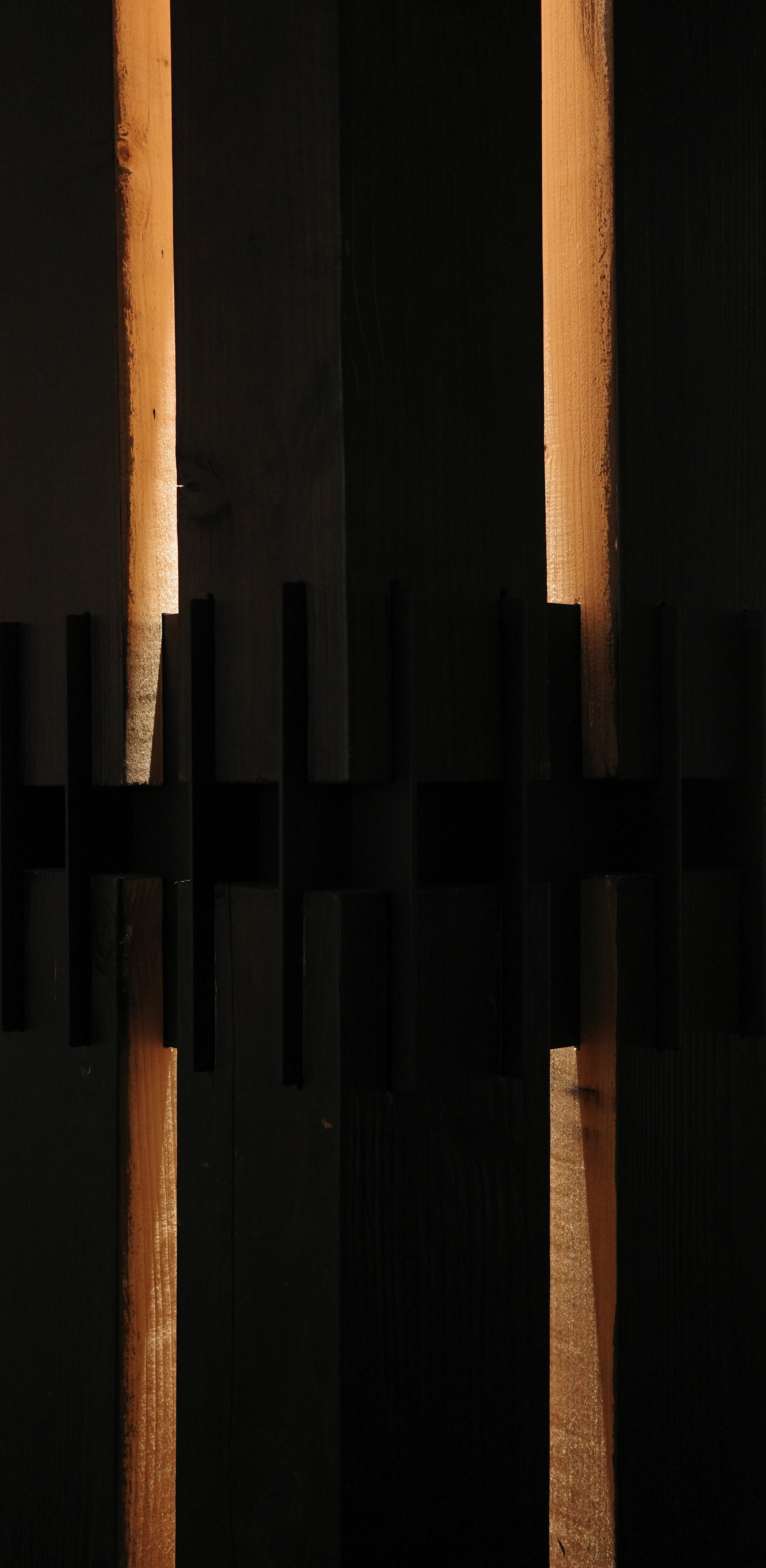
Credit: Korean Cultural Center in Stockholm
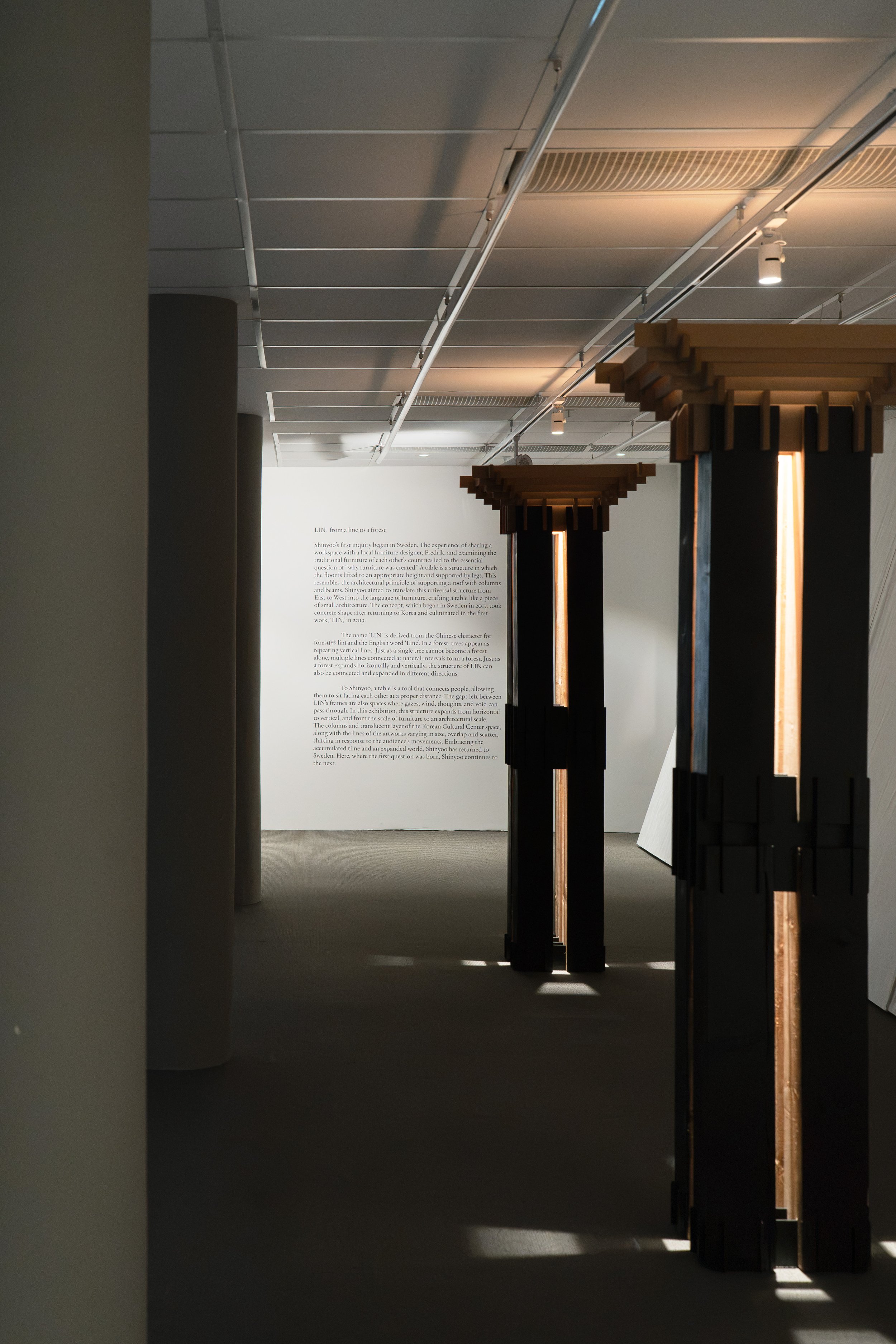
Credit: Korean Cultural Center in Stockholm
DKL: And I think this brings me to the last point I'd like to share. We had a short discussion today about the differences between Japan, Korea and China. I find it very interesting to compare these three cultures, as they are probably the most well-known in East Asia.
We were talking about gardens, so I'd like to hear just one final thought on how these three cultures differ from one another.
YongSub SHIN: When we were in Sweden, we reflected on traditional Korean culture and how, from a European perspective, it might seem quite similar to Chinese and Japanese culture, since all three have traditionally used wood in their architecture. So we wanted to explore the differences between these three cultural backgrounds in order to better define our Korean heritage and the distinct characteristics of Korean aesthetics and culture in general.
From what I understand, if we look at traditional gardens in these three countries, for example, Chinese gardens have traditionally been very large in scale. They try to recreate nature on a grand scale, almost as a complete representation of the natural landscape.
Japanese gardens, particularly Zen gardens, also seek to imitate nature, whether it is a nearby forest, mountain or lake. However, they do so by simplifying and minimizing it. They still recreate nature, but on a smaller scale and in a more simplified form.
In Korea, however, traditionally, there was no garden in the same sense. From my perspective, based on my understanding and studies, I believe that the Korean garden is our window. In other words, there is no separate garden; the view from the window of our living environment becomes our garden.
I think this story reveals something about traditional Korean culture and its attitude towards nature. And I simply love this idea.
DKL: And I wanted to make sure the audience heard it too. Thank you.
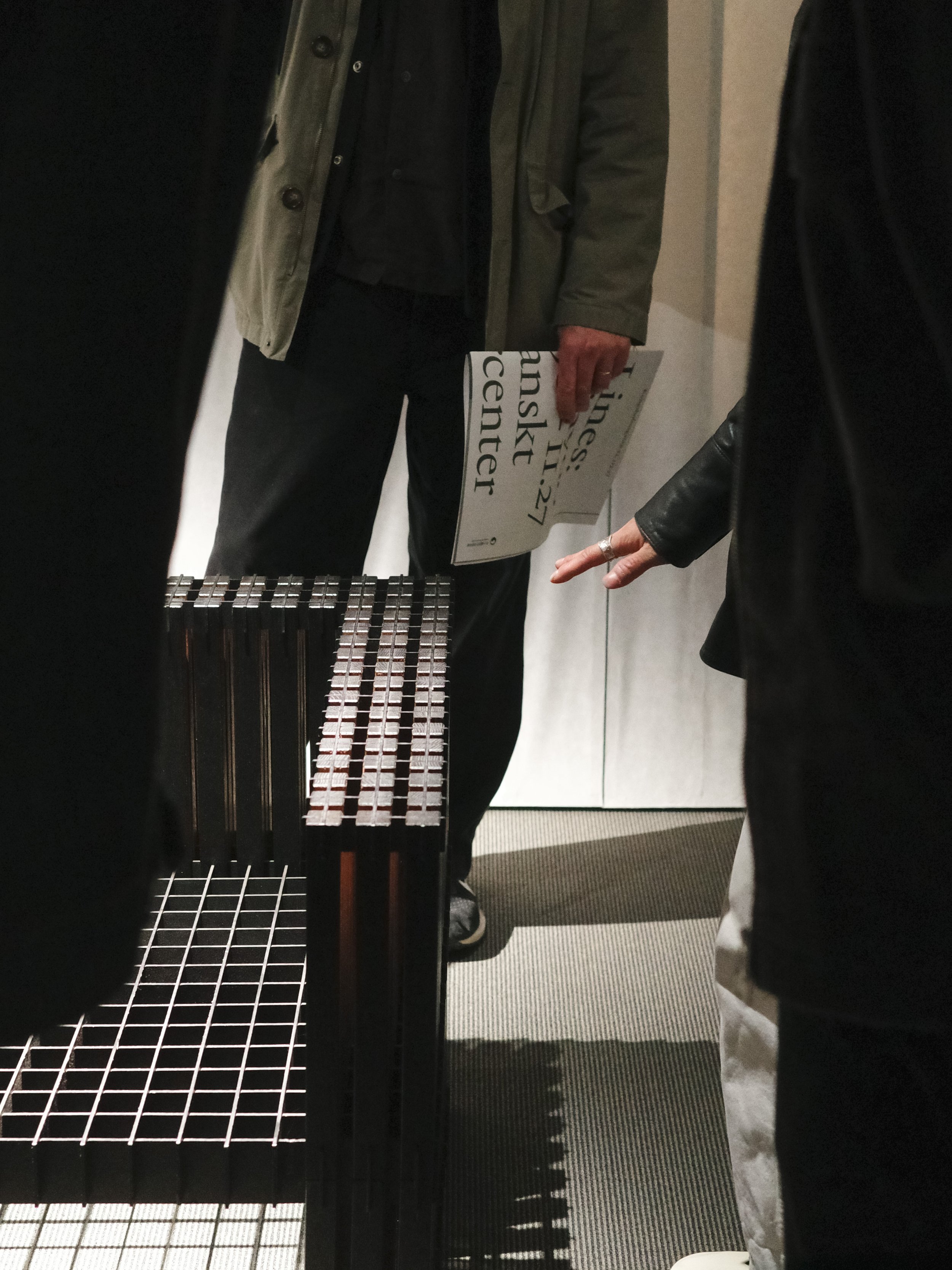
Credit: Korean Cultural Center in Stockholm